

Hotel room block management is one of the most important skills for event planners. If you have done it before you know the drill: a lot of emails, calls, shifting rooming lists and an event date that creeps up fast.
Beginners, do not worry, this article is also for you. We will make sure to go into the details of what hotel blocks are, how to contract them, how to avoid attrition clauses that are costing you money, and other insider tips.
Ready to dive in? Let’s explore room block contracting and management.
What Is a Hotel Room Block?
A hotel room block is a set of rooms the hotels reserves for your group. It typically comes at a discounted rate and is mostly used for big events where you need to make sure people will have a place to stay near your venue.
Blocks are usually contracted for big corporate events, weddings, professional tours, sports tournaments and for every situation where there is someone managing the trip details of a large number of people.
How do you to Contract a Hotel Room Block?
There are several steps in contracting a hotel room block. First the planner needs to estimate the number of rooms. Then, a good practice is to assess or forecast the attendance estimate to better plan the contract terms.
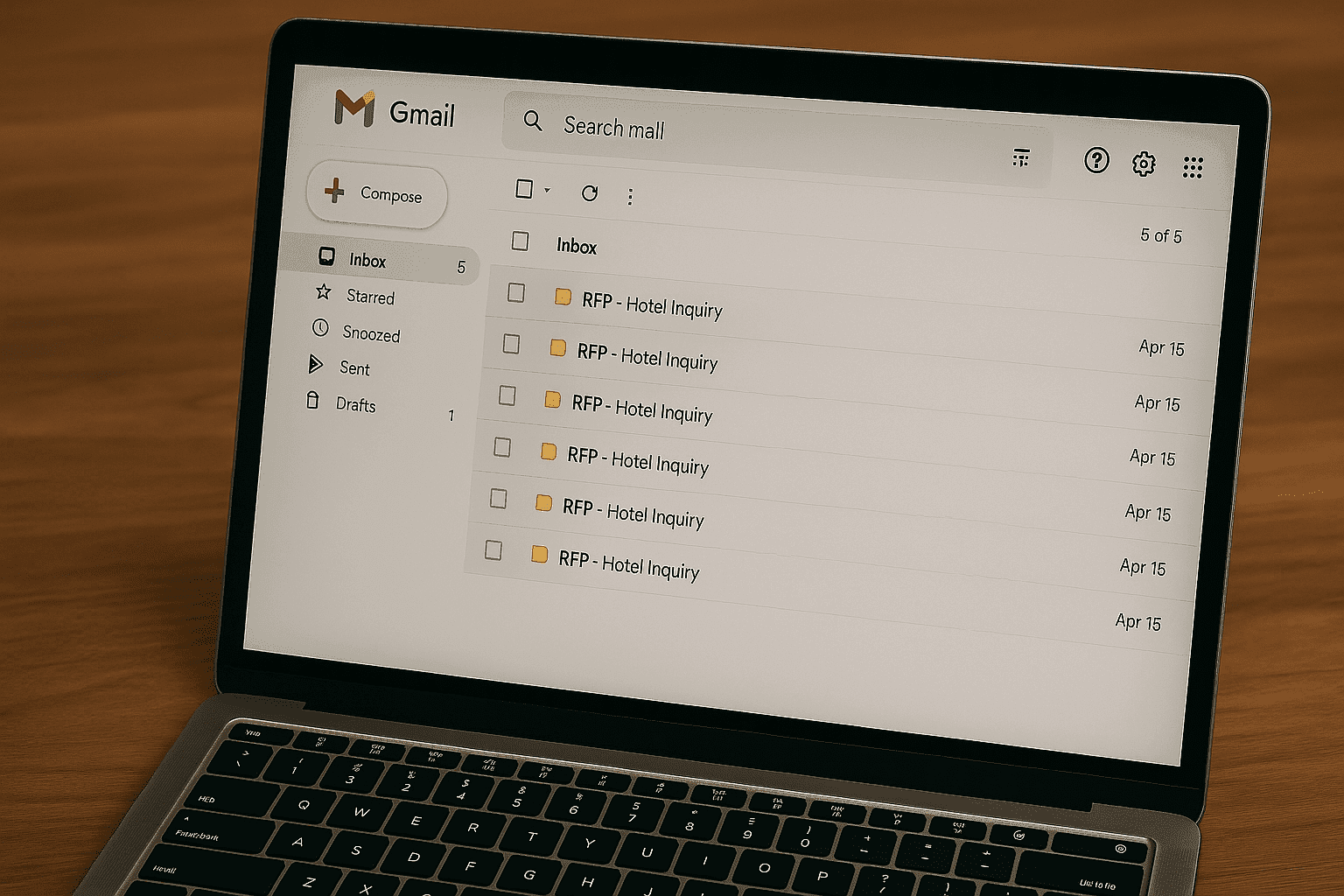
After the initial step, the planner needs to contact various hotels, usually by sending requests for proposals (RFPs) with detailed terms. This RFP needs to have all the necessary details such as number of rooms, amenities, cut-off dates, perks and financials of the operation.
Once the RFP is accepted by the hotel, a contract is signed with all the negotiation terms. The final step is room block management, in which the planner coordinates attendees and the bookings in order to meet the target attendance rate.
Benefits of Booking a Hotel Block
Room blocks offer a range of benefits, and mandatory for bigger events where it’s important for the attendees to stay at the same hotel. Here are the main ones:
Guaranteed Availability. The planner can rest assured that all the guests will have rooms to stay. The hotel will always prioritize block contracts over retail purchases due to the contractual nature of the deal.
Discounted Group Rates. Blocks are like buying hotel rooms at wholesale, making the prices range from 10% to 40% lower than the average nightly rate. This is a huge plus for guests and big companies who are looking to save for their corporate travel. If you want to estimate discounts, we built a hotel block savings calculator you can access by clicking here.
Convenience and better event experience for guests. Guests know exactly where they will stay and they don’t need to go through the hurdles of looking for a hotel. The whole experience is just seamless. Plus, they will be staying close to other attendees, making it a perfect occasion to network, mingle and enjoy the event.
Types of Room Blocks
Not all Room Blocks are the same. These are the most usual types you encounter in contracts:
- Courtesy Block. Rooms are held until a specific date, with no payment for the unused rooms. This is the most beneficial to the event planner, since there is no financial downside.
- Attrition-based blocks. The usual contract, where there is a margin for unbooked rooms (e.g: 20%). Anything that goes beyond that margin will be charged a fee or full booking price depending on the contract.
- Contracted block. You commit to that exact number of rooms and assume all the financial downsides of unbooked rooms, having to pay extra fees.
Choosing the right type of room block for your event is the key for success. The bigger the event and higher the attendance confidence is, the more you can negotiate with the hotel for the best possible terms.
Room Blocks Payment Models
There are two main payment options for room blocks: pay-on-own or Master Bill.
In the pay-on-own model, the attendees book their rooms and pay directly. This model enables the planner to create deal packages, track attendance to the detail, and other perks. The master bill model tends to be used for corporate events, where the contract has a pre-approved value in which every fee, attrition, policies and the likes are set.
Do you want to learn more about managing attrition clauses? Click here to access our full article on how to negotiate better terms.
Negotiating and Making the Most of Room Blocks
Event planners and hospitality professionals have one thing in common: they want to provide the guest with the best experience possible during their stay and event participation. As a planner, you can negotiate extras to make the most out of your contracts:
- Extra perks. Negotiate perks you can offer to guests such as: free parking, free wifi, late checkout, upgrades breakfast, shuttle service, and additional goodies at the rooms.
- Perks for VIPs. If during the negotiation you are not able to add perks for the general attendees, you can try to negotiate perks for the VIPs only. You can leverage the VIPs’ importance during the negotiation so both parties are aligned.
- Offer options. Consider contracting more than one location so guests can pick the one they prefer.
- Track attendance and stay flexible. Is the attendance rate higher than expected? Try to add more rooms to your contract by negotiating with the hotel.
- Build experiences. Are there tours you can offer guests near the location? Any experience you can bundle with the booking to improve guest experience?
- Always inform the cut-off date. In most contracts there is a specific cut-off date for cancellations, usually 30 days pre-arrival. Make sure the guests are informed and make this information available in all communications in order to avoid expenses.
Room Block Management
We have now reached the most important aspect of room blocks: management. Once the contract is negotiated and signed, the cut-off date is set, and everything is ready to go, managing the rooms is going to be the main part of the job. Here are the main key points you need to observe:
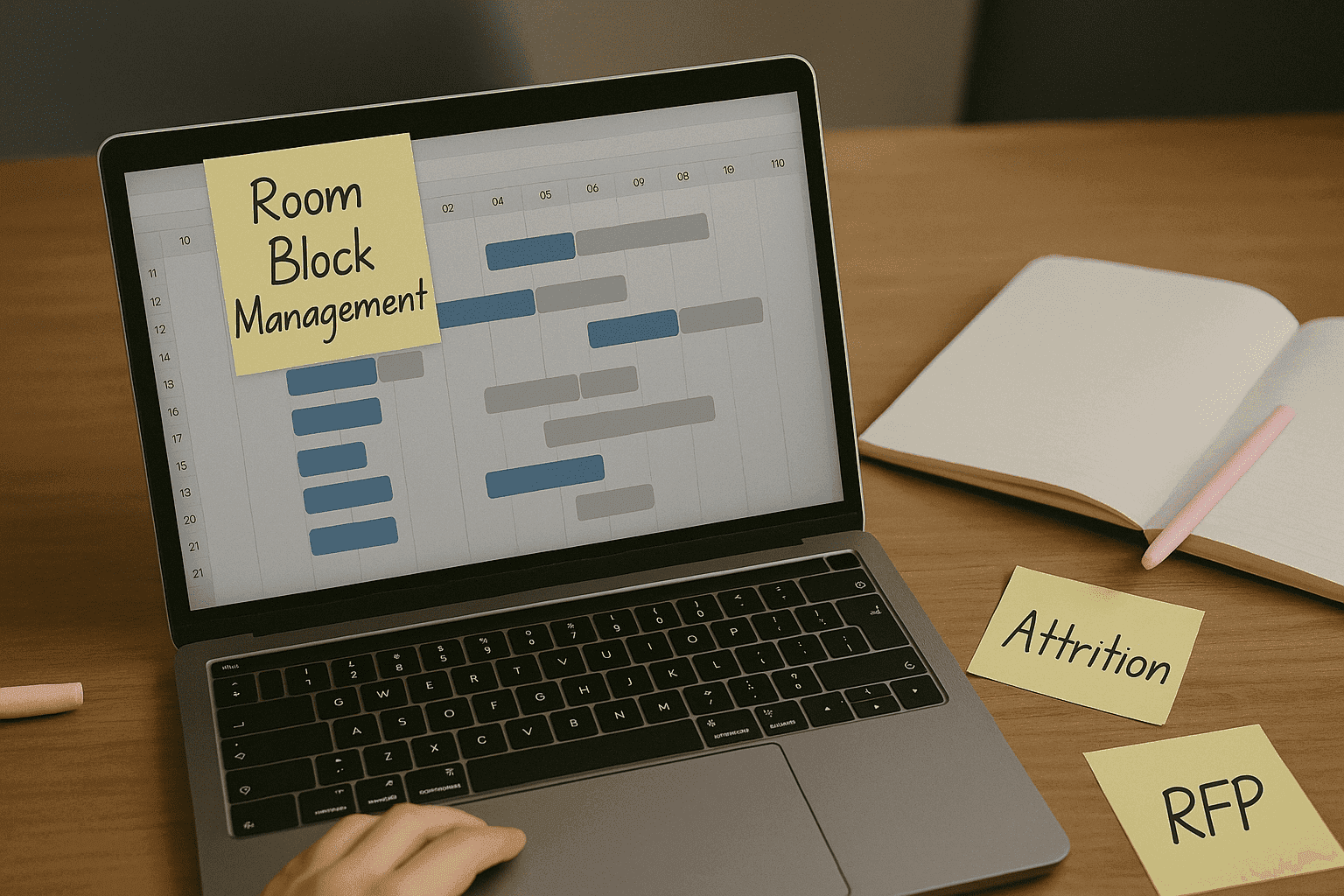
Room and attendance tracking. You need to track the occupancy and make adjustments such as requesting more rooms. If you want to be more analytical you can track the pacing of the bookings.
Most people use spreadsheets to track this information, taking hours to collect and record the data, but it’s a laborious and time consuming task. Here at Crewfare we have our Digital Rooming List feature that simplifies the whole process.
Communication. Making sure the attendees are up to date with the event information is critical for success, so you need to make sure the booking process is seamless. It’s recommended to build a cadence that reminds people of the cut-off date and emphasize why booking inside the block matters.
Along the way it’s common for attendees to make adjustments or reach out to fill a specific need like a shuttle or an extra they need in their room. Be ready for a lot of one-on-one communication and customer service requests.
Room Block Management Checklist
Managing a Room Block is not an easy task, here is a suggested checklist you can follow for your events:
- Forecast the number of attendees and rooms
- Set cut-off date
- Shortlist hotels
- Send RFPs (Request for Proposals)
- Compare proposals
- Negotiate terms, perks and extras
- Sign contract
- Plan communication cadence
- Reach out to attendees with all the necessary details
- Weekly review inventory
- Schedule attendee reminders
- Be ready for last minute changes and attrition negotiation
Need to knock some of these items fast off your list? Launchpad makes it easy to contract hotel room blocks and send RFPs to thousands of hotels in minutes. Click here to sign up.
Conclusion
Mastering room block management comes down to three main points: contracting, communication and operational visibility. By doing these well you will be able to lock in availability, avoid surprise costs, deliver a smooth experience and be awarded five star event reviews.
Here at Crewfare, we offer technology to help you in each step of the process. Launchpad makes it seamless to contract hotel blocks, Backstage leverages technology to help you manage events and All Access boosts events travel.
If you have any questions, reach out at our official contact page.